
In Kyoung Chun
On Your Path
November 6 - December 26, 2026
215 N Limestone
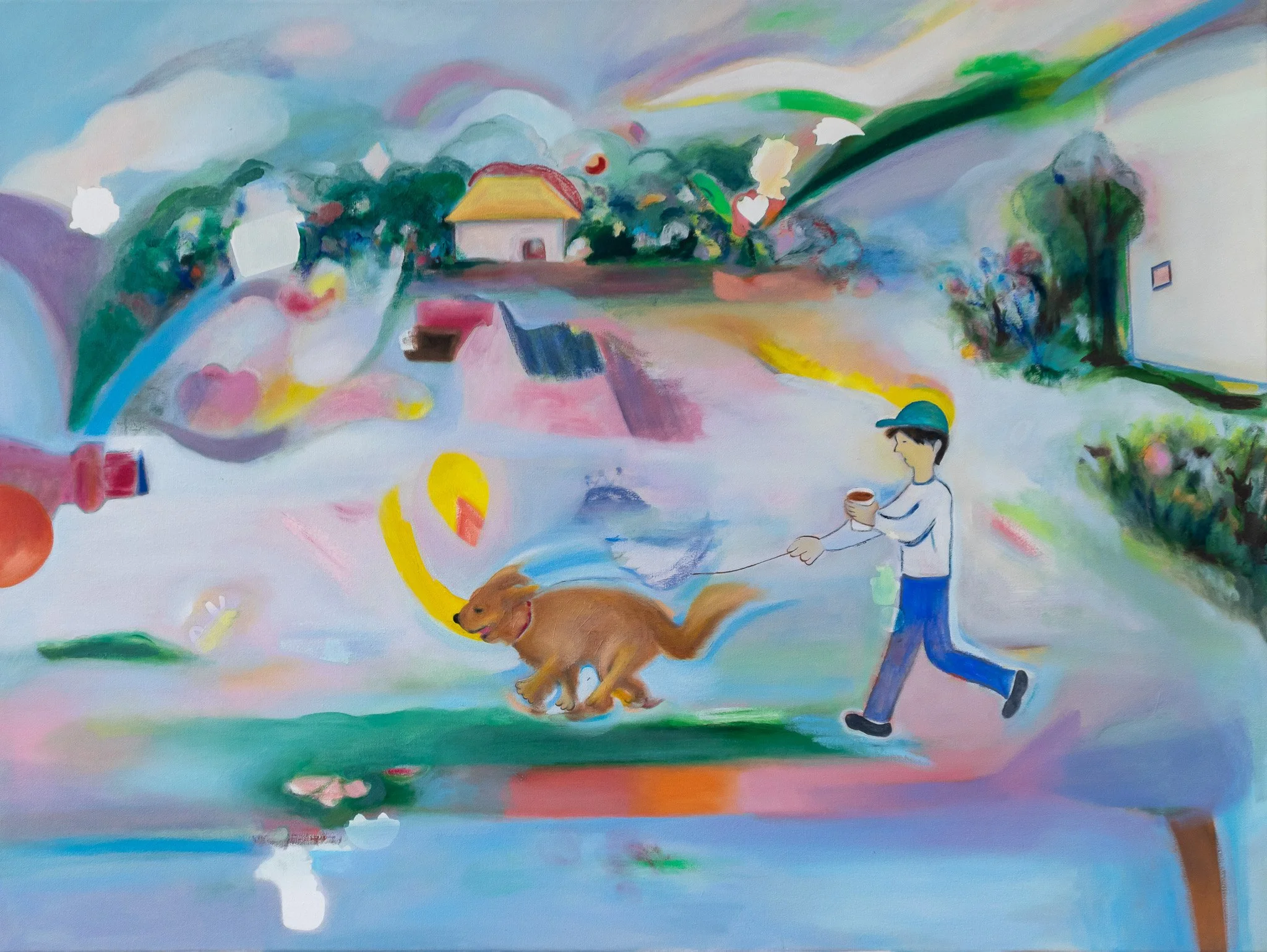
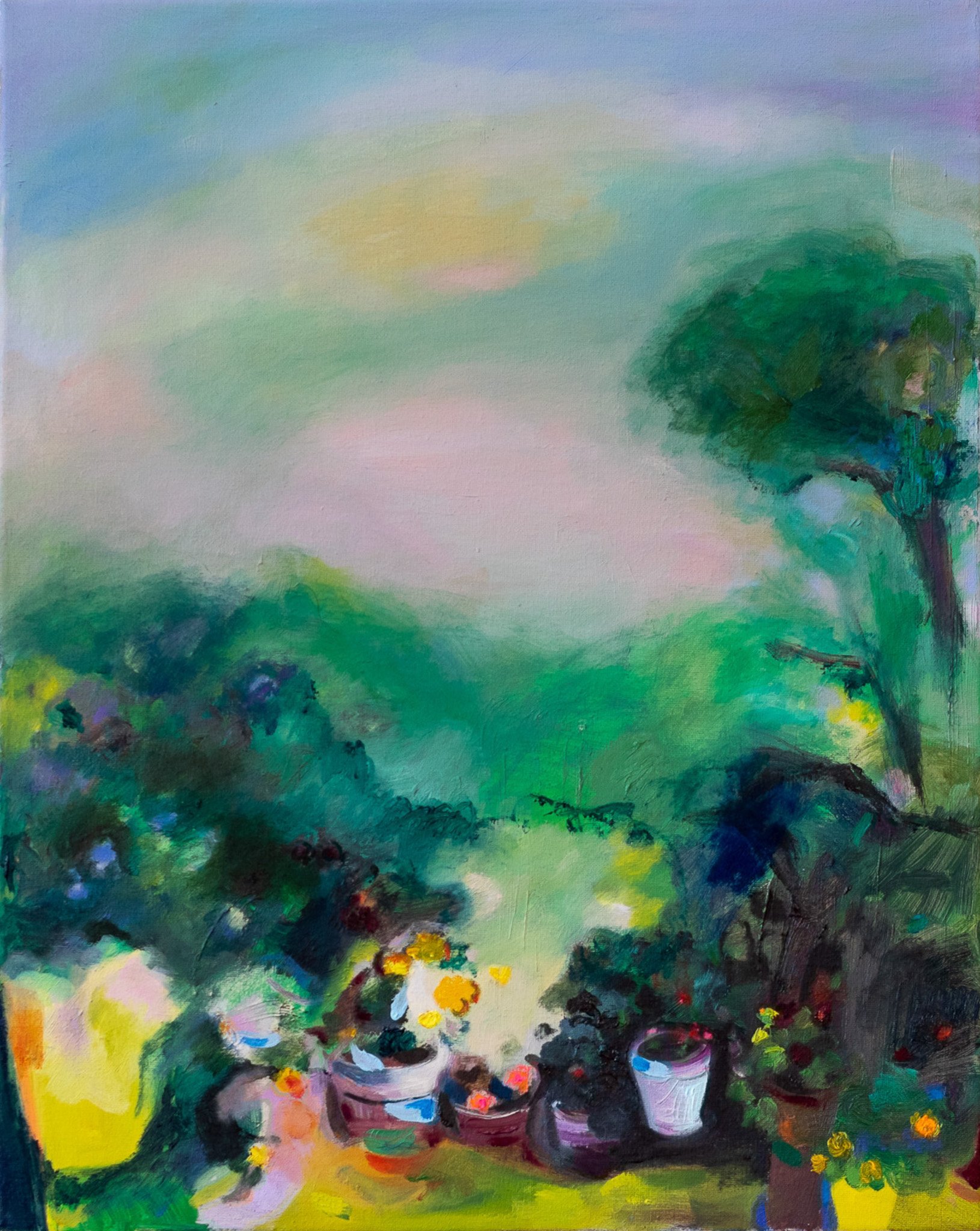
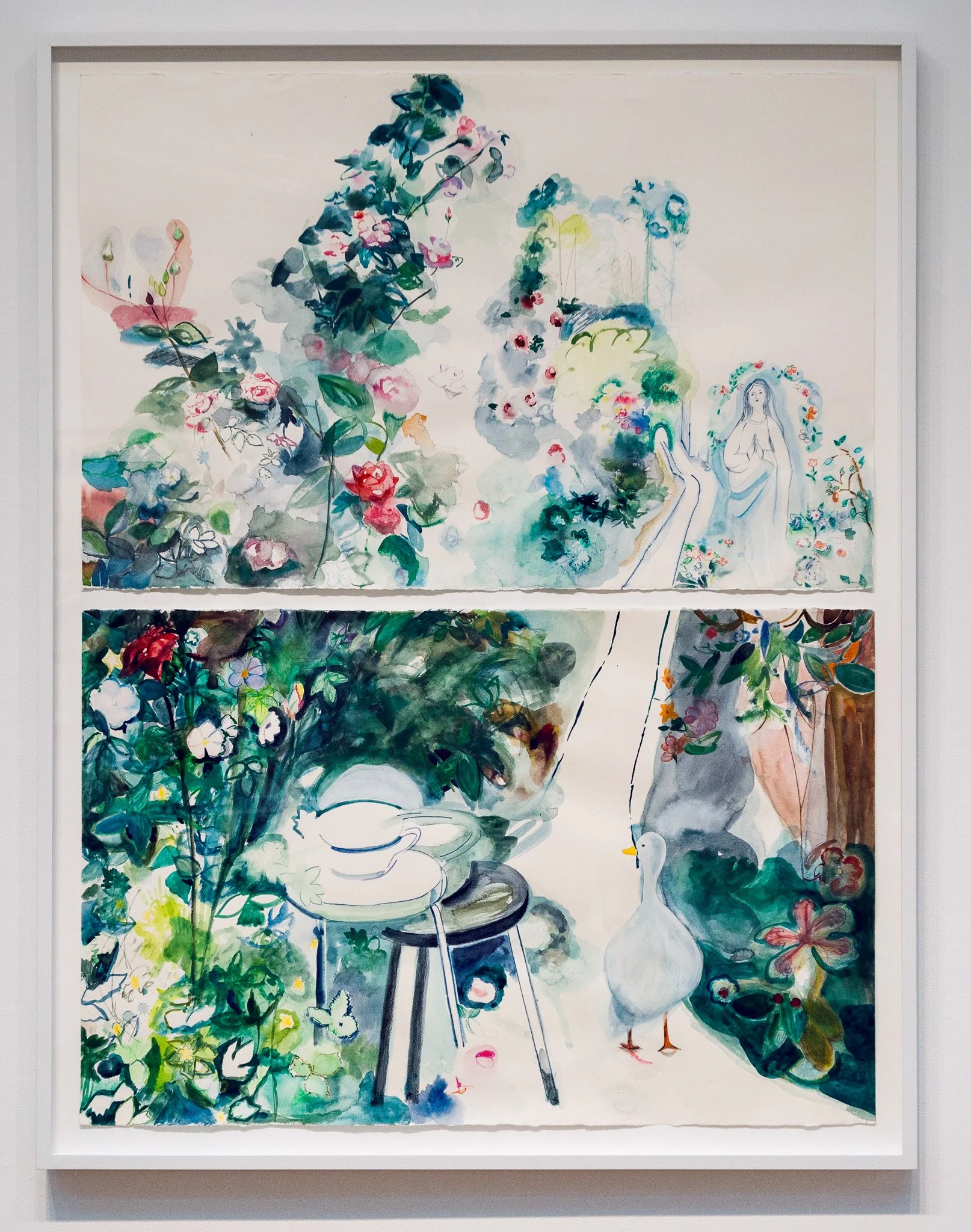
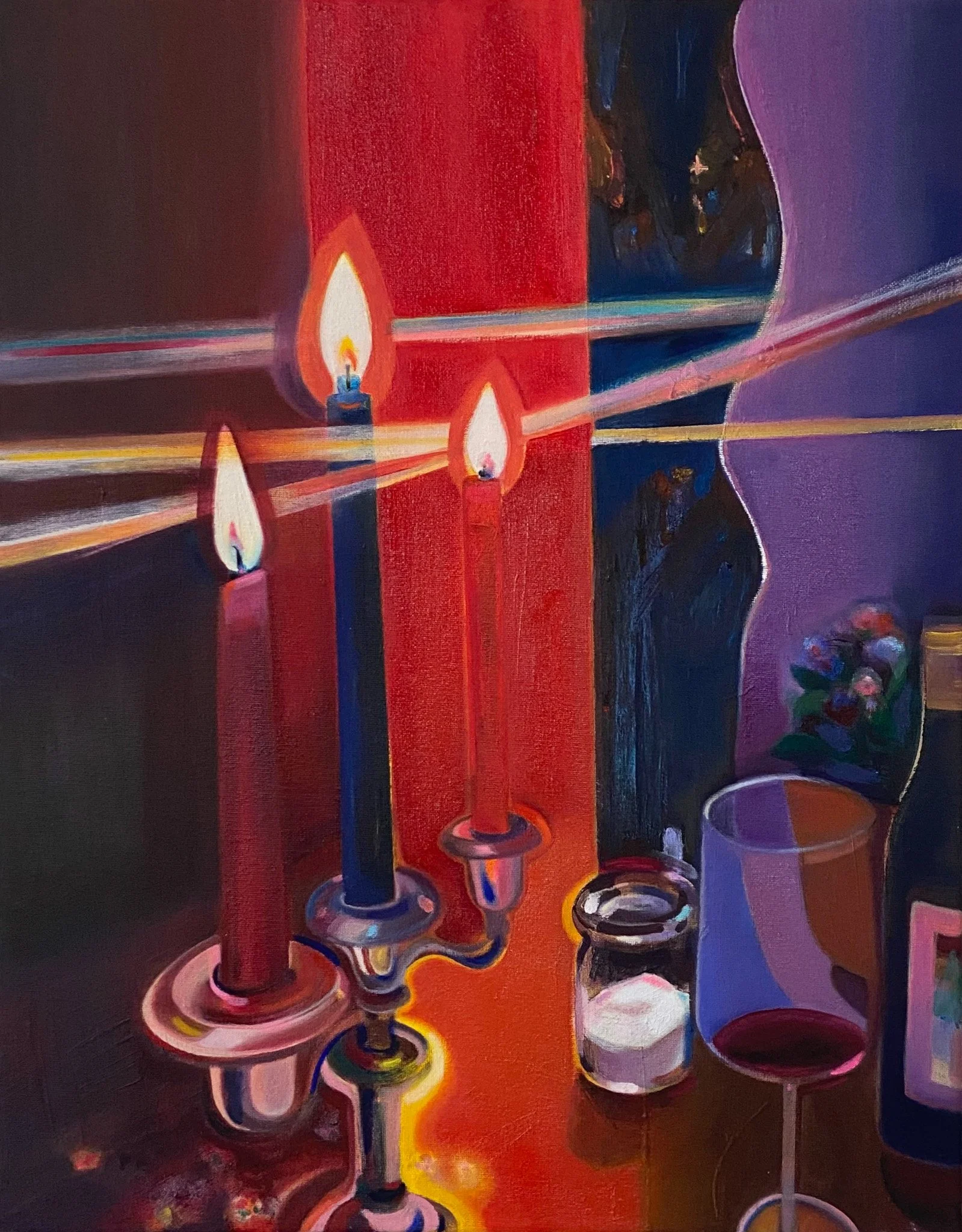
The work of In Kyoung Chun is a quiet yet insistent invitation to consider the complex realities of placemaking in a world that seems to grow more displaced with each passing day. Whether through richly colored oil paintings, ephemeral watercolors, or minimalist sculpture in colored plexiglass, Chun challenges us to consider the emotional weight—the great joys alongside the tension and isolation—of our most intimate locales.
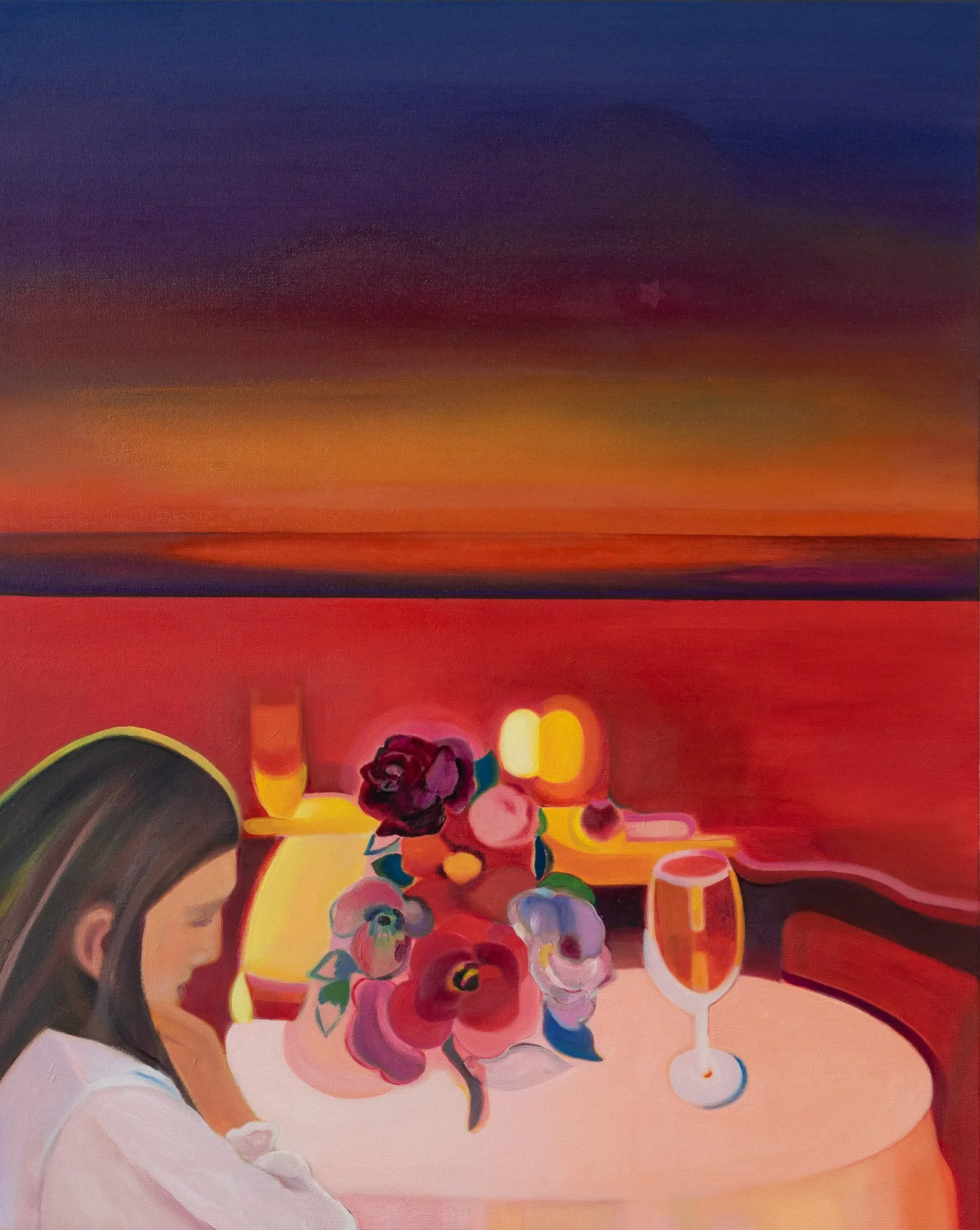
These works begin by formally reducing the house, the garden, and other domestic spaces down to their most fundamental shapes, and then flooding them with rich, emotive content through Chun’s fluid brushwork and exacting use of color. This process, first reduction and then vibrant saturation, allows the work to calmly and humbly take on the burden of convoluted individual and social histories, linking together personal and political experiences of spaces and the way we live within them.
Born in South Korea and based in Atlanta, Chun combines influences from her home country with those of Western art-historical traditions. Her oil paintings in particular recall the rich hues, compressed interiors, and loose, near-abstract brushwork of the French Intimist tradition—Pierre Bonnard, Édouard Vuillard, and Félix Vallotton. It is interesting to note that these turn-of-the-century painters were in their own time deeply influenced by East Asian art, whose sense of minimal elegance helped them shift toward modernism’s sense of experiential and emotive abstraction. Chun’s paintings follow a similar path, imbuing quotidian scenes—a table arrangement, a glowing window, a setting sun—with an overwhelming visual intensity.
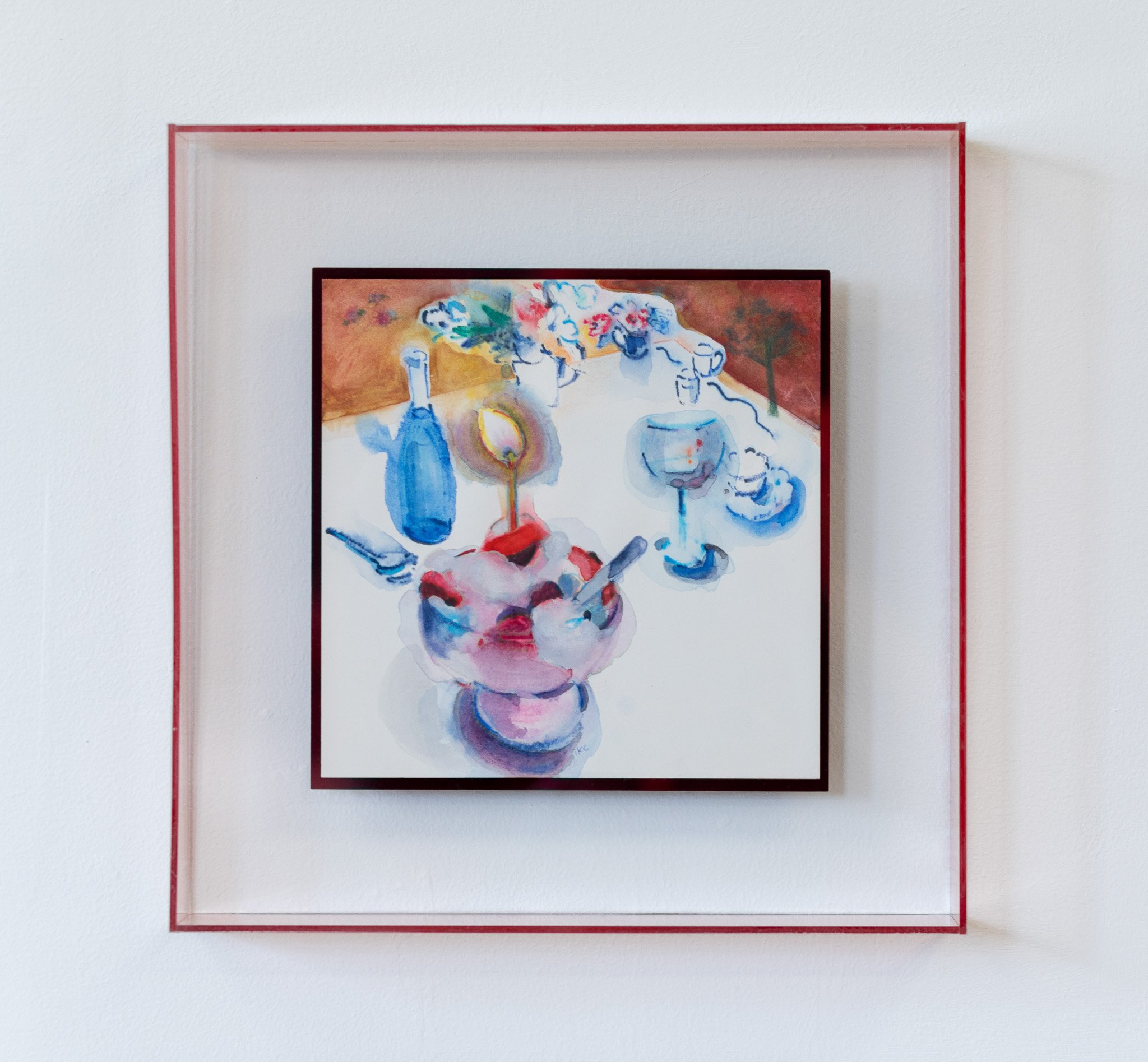
Chun also draws from munbangdo, or “scholar’s study painting,” a genre of still life popularized in Korea’s late Joseon period, a time of intense cultural exchange within East Asia. Often depicting objects made outside of Korea, these paintings served at least in part to catalogue the growing size and complexity of the world experienced by their artists, as state-building and diplomacy within East Asia and the rise of a global capitalist trading system both accelerated. Chun’s references to the genre in her own paintings thus carry on a tradition of using painting as a way to slow down and make sense of a world upended, for better and for worse, by historical progression.
The plexiglass structures surrounding some of these works suggest both an exposure of a vulnerable “private” sphere and a protective barrier around the sanctuary within. Fundamentally translucent, yet often tinted with the softly glowing colors of her paintings, these structures embody a tension Chun has described as reflecting her immigrant experience. Continuing this play with negative space and transparency are her recent large-scale watercolors, which leave much of the surface empty, inviting us to join Chun on her path. A path implies motion—away from one home, serene respite, or beloved memory, and toward another—yet each of Chun’s works offers a place to pause and live along the way.